Host
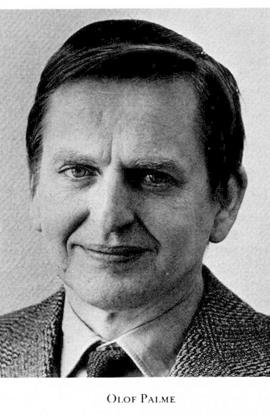
Welcome to today’s episode. My name is Walther, and my name is Alexander and today we're going to talk about one of Sweden’s most important politicians – Olof Palme. He was a man who put Sweden on the world map, whose words created both admiration and anger, and whose death on February 28, 1986 still casts a shadow over the country. This is the story of his life, his work – and the murder investigation that is still debated.
Background and early life
Olof Palme was born in 1927 in Stockholm, in a wealthy and conservative family. Even though he grew up with many privileges, he became interested in social issues at an early age. After finishing high school, he did military service as a reserve officer and then studied in the United States at Kenyon College. There he saw a society marked by segregation, poverty, and political conflict. This affected him deeply.
When he returned to Sweden, he continued his law studies and became politically active – even though his family did not always like the left-leaning path he chose.
A political career that took off quickly
Palme was recruited early into the Social Democratic Party. In 1953 he became secretary to Prime Minister Tage Erlander, and he quickly showed his intelligence, sharp speaking skills, and strong work ethic.
In the 1960s his career accelerated:
-1963: Minister of Communications
-1967: Minister of Education
-1969: Prime Minister and party leader
As leader, Palme pushed through major social reforms – expanding the welfare system, investing in equality, education, the environment, and international solidarity.
But it was above all in foreign policy that he made headlines. He criticized the U.S. bombings in Vietnam, the apartheid regime in South Africa, and he also pointed out problems in the Soviet Union. He spoke out where others stayed diplomatically silent.
His openness made him a beloved symbol of peace and justice – but also a controversial figure internationally.
Why he was respected
Even though he could be polarizing, Olof Palme was deeply respected. He was an ideological politician who spoke directly to people; a brilliant speaker who combined intellect with passion; and a brave leader who dared to say things others avoided. Even political opponents spoke of his integrity and strong commitment. Palme was not just a politician – he was a force.
The night of the murder
On February 28, 1986, Olof and Lisbeth Palme went to the cinema without planning it in advance – they saw the film The Mozart Brothers. They had no bodyguards with them. Palme often moved around without security.
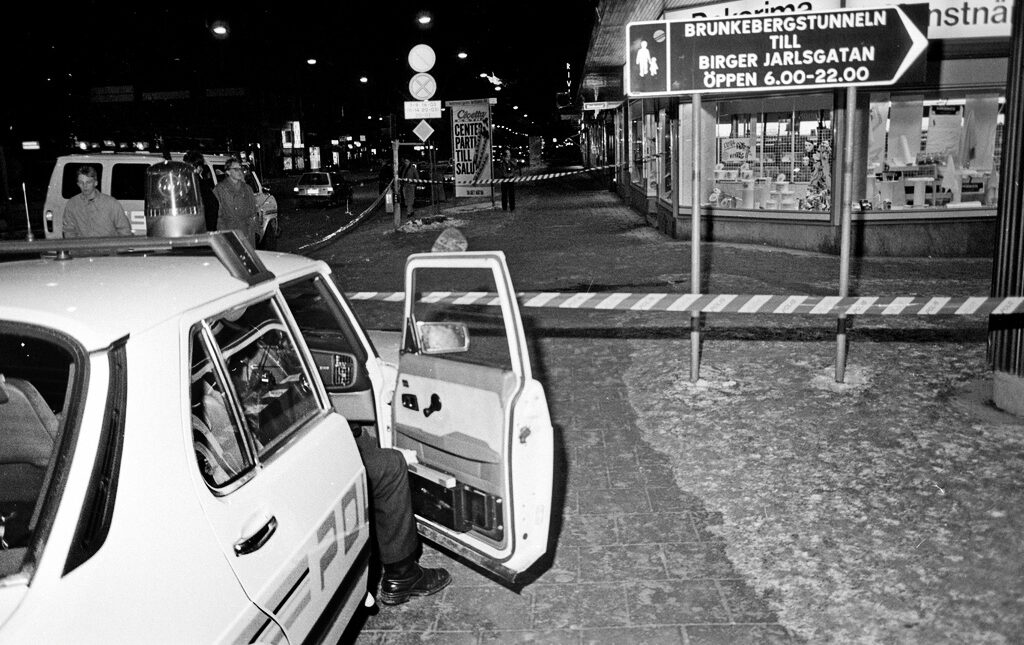
At 11:21 p.m., at the corner of Sveavägen and Tunnelgatan in Stockholm, an unknown man fired two shots. Olof Palme fell immediately, hit in the back. Lisbeth was injured by the second shot but survived.
What had happened was unthinkable: Sweden’s prime minister had been murdered in the middle of central Stockholm.
The investigation
One of the world’s largest criminal cases
The police investigation became enormous – one of the biggest in the world. More than 10,000 people have been questioned, hundreds of thousands of documents registered, and many theories tested. Still, no one has been convicted.
The investigation has been heavily criticized over the years for mistakes:
poor securing of the crime scene
delayed emergency calls
interviews done late and sometimes without structure
clues that were lost or ignored
This allowed several theories to grow – often competing with one another.